Nurturing your child’s creative thinking ability means encouraging curiosity, imagination, and problem-solving in everyday life. Creative thinking helps kids explore ideas, express themselves confidently, and adapt to new challenges. It isn’t limited to art or play—it shows up in how children ask questions, solve problems, and make sense of the world.
Parents can support creativity by giving children the freedom to explore, make mistakes, and think independently. Small daily actions, such as open-ended conversations, unstructured play, and emotional encouragement, help creativity grow naturally over time.
According to the UK government’s report on literacy, children were most creative between the ages of 3-5. Kids excel in all kinds of subjects. Did you know there’s a gap in climbing, literacy, and math skills?
However, some kids struggle with one or more of these skills. And one of the primary reasons why is a lack of creative thinking.
Creative thinking is a process of critical and lateral thinking combined with open-mindedness. It prepares children to solve problems more effectively in the future.
But how do you nurture creative thinking in your child? If you want to foster creativity in your child and their school performance, keep reading.
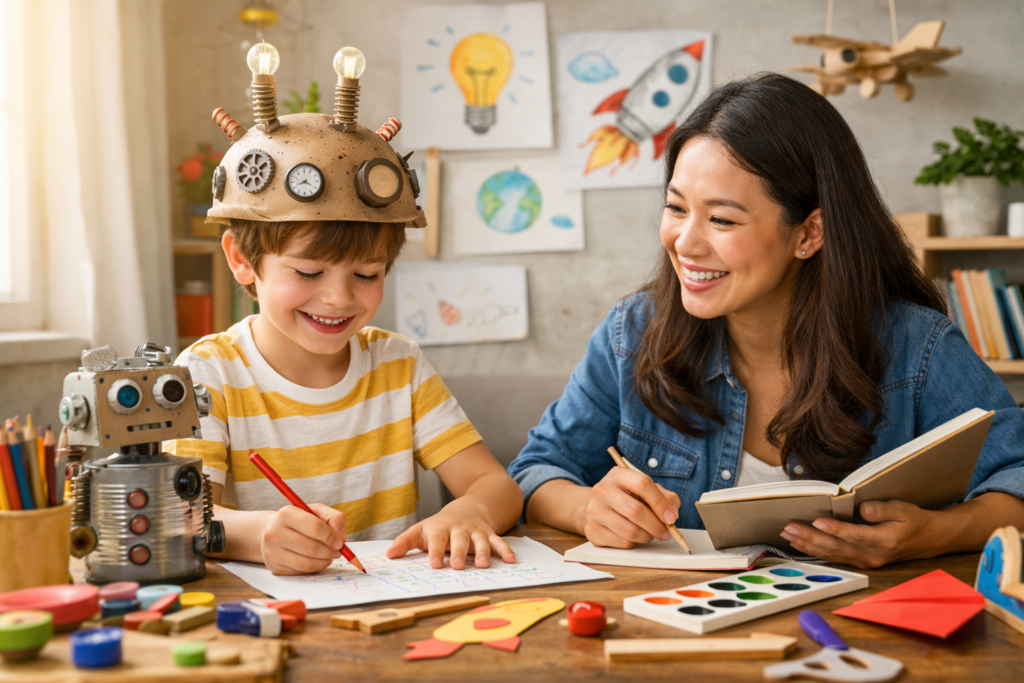
How to Nurture Creativity in a Child?
Every child has a spark of creativity — and as parents, we can help it grow into a lifelong strength. Creative thinking isn’t just about art or crafts. It’s about problem-solving, curiosity, imagination, and resilience — all skills that support success in school and life.
Nurturing your child’s creative thinking means giving them space to explore, make mistakes, ask questions, and express themselves freely. When children feel safe to imagine and experiment, they learn to think in new ways and discover their unique strengths.
Encourage Them to Be Curious
One of the best ways to nurture your kid’s creative ability is to encourage them to be curious. When kids are curious, they’re more likely to explore and experiment. This helps them to think outside the box and come up with new ideas.
So, if you want to encourage your kid to be curious, don’t hesitate to ask them lots of questions. You can also encourage them to ask their own questions.
You can take them on trips to different places so that they can learn more about the world around them.
Give Them Freedom to Fail
It’s important to give your kids the freedom to fail. This may seem counterintuitive, but it’s actually essential for their creative development. When kids are allowed to fail, they learn from their mistakes. This helps them to become more resilient and innovative.
Of course, this doesn’t mean that you should let your kids do whatever they want. But it does mean that you shouldn’t discourage them from taking risks.
Additionally, it’s important to avoid helicopter parenting. This will only make it harder for your kids to develop their own creative ideas.
Encourage Them to Be Imaginative
Encouraging your kids to be imaginative is another great way to nurture their creative thinking skills. When kids are imaginative, they can come up with all kinds of new ideas.
So, how can you encourage your kids to be imaginative? One way is to give them plenty of opportunities to play. This can be either doing arts, solo play, or social play.
It’s also important to provide them with toys and materials that they can use to be creative. Here are a few tips to foster creativity in kids.
If you encourage your kids to be curious, imaginative, and resilient, they’ll develop the skills that they need to succeed in life. Learn more here.
What Creative Thinking Really Means for Kids
Creative thinking is the ability to explore new ideas, solve problems in original ways, and imagine possibilities beyond the obvious. It’s not limited to art projects; it shows up in everyday moments — in asking “what if…?”, inventing games, exploring nature, or solving a puzzle in a different way. Creative kids often use imagination, curiosity, and flexible thinking to make sense of the world around them.
Encourage Curiosity and Questions
Curiosity is at the heart of creativity. When children ask questions — even endless ones — they are practicing creative thinking. Support their curiosity by welcoming their questions, encouraging them to ask more, and exploring answers together rather than shutting them down.
Practical tips:
- Ask open-ended questions like “What do you think would happen if…?”
- Explore answers together rather than offering quick solutions.
- Take curiosity on outings — a walk, a museum, or a library trip can spark new ideas.
Give Them Freedom to Experiment (and Fail)
Creativity grows when kids feel safe to try new things without fear of judgment. Allow them to take risks, make mistakes, and come up with wild ideas. This helps them learn resilience and flexible thinking. When children know that failure isn’t the end but a step toward learning, they become more confident and innovative.
What this looks like at home:
- Let them attempt tasks in their own way, even if it’s messy or slow.
- Avoid critiquing or correcting immediately — ask them to explain their thinking first.
- Celebrate “learning moments” when something doesn’t work at first.
Create a Space That Inspires Imagination
A designated area for creative activities — with drawing tools, recycled materials, puzzles, and books — invites kids to play and explore. A creative space doesn’t need fancy equipment; it just needs materials that invite experimentation and discovery.
Ideas for setting up a creative space:
- Keep art supplies within reach
- Add open-ended toys like blocks, costumes, or nature objects
- Change materials periodically to keep the experience fresh
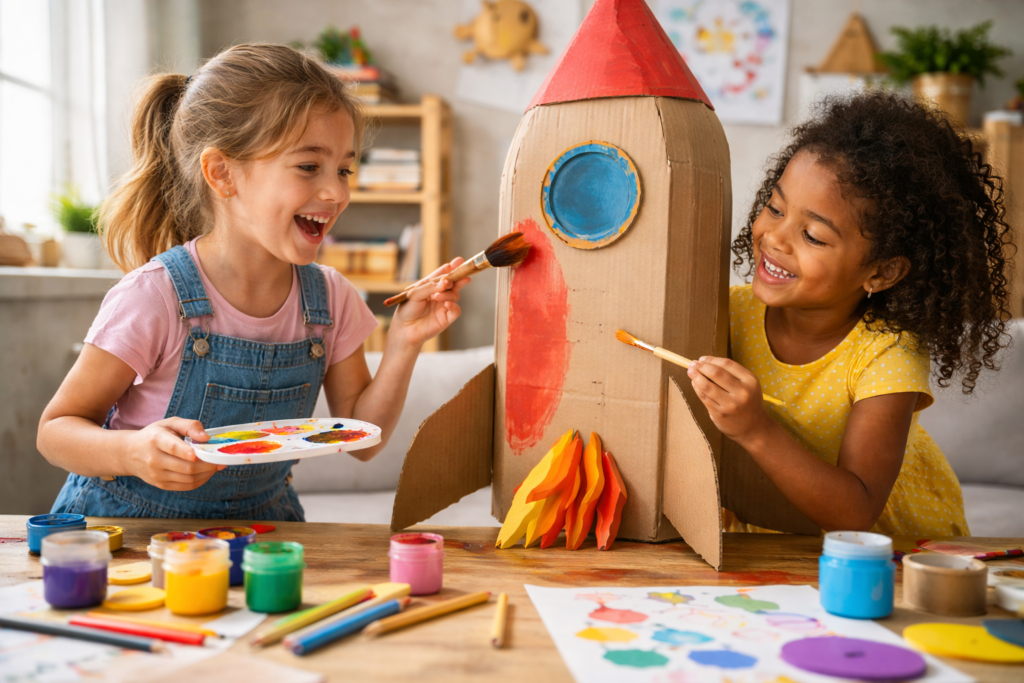
Support Play and Free Expression
Play is where creative thinking naturally comes to life. Unstructured play lets children explore ideas, invent stories, and solve problems without pressure. Whether they’re building a fort from sofa cushions, mixing colors, or acting out roles with dolls, play helps them make connections and use imagination in meaningful ways.
Ways to support play:
- Schedule daily playtime with minimal screen interruptions
- Let them lead the play — don’t always direct it
- Join them sometimes, but don’t take control
Encourage a Growth Mindset
A growth mindset — believing that effort and exploration help us grow — boosts creativity. When children feel that their abilities can improve with practice, they stay curious and persistent. Instead of focusing on perfect results, emphasize the process and effort.
Tips for parents:
- Praise effort over outcome
- Talk about how challenges help us learn
- Share your own creative attempts and what you learned
Support Creative Thinking Through Everyday Activities
You don’t need special classes to nurture creativity. Everyday experiences can be creative opportunities:
- Read stories and imagine alternate endings
- Ask “what if” questions during car rides
- Let kids choose how to decorate their homework or room
- Explore new environments — parks, markets, cultural events
These small moments add up and help children see the world in new ways.
Start Nurturing Your Kids for Creative Thinking Now
Nurturing your kid’s creative thinking ability is important for their future success. As a parent, you can help them by encouraging their interests, providing opportunities for them to explore their creativity, and supporting their efforts.
With your help, your kids can develop their creative thinking skills and reach their full potential.
If you enjoyed this article and would like to learn more tips on any topics, please visit our website. We have more great content for you today!
FAQ
What is creative thinking in children?
Creative thinking in children is the ability to generate ideas, solve problems in new ways, and use imagination to explore possibilities. It includes curiosity, flexibility, and original thinking, not just artistic skills.
Why is creative thinking important for kids?
Creative thinking helps children develop problem-solving skills, confidence, and emotional resilience. It supports learning, communication, and adaptability, which are important throughout childhood and adulthood.
At what age should parents start nurturing creativity?
Creativity can be nurtured from early childhood. Young children naturally explore and imagine, and parents can support this by encouraging play, curiosity, and self-expression from the toddler years onward.
How can parents encourage creative thinking at home?
Parents can encourage creative thinking by asking open-ended questions, allowing unstructured play, supporting curiosity, and avoiding excessive criticism. Giving children freedom to experiment helps creativity develop naturally.
Does screen time affect a child’s creativity?
Too much screen time can limit opportunities for imaginative play and creative thinking. Balanced screen use combined with hands-on activities, reading, and free play supports healthier creative development.
What activities help improve creative thinking?
Activities such as storytelling, drawing, building, role-playing, reading, exploring nature, and solving puzzles all help strengthen a child’s creative thinking skills.