Parenting is a balancing act. You want to protect your child from harm while giving them the freedom to grow. Although it’s natural to step in and help, doing everything for your child can unintentionally prevent them from developing essential life skills. Learning how to raise an independent child isn’t about expecting them to do everything alone. It’s about gradually teaching them to make decisions, solve problems, and believe in their own abilities. Independence nurtures resilience, confidence, and responsibility—qualities that benefit children throughout their lives.
Here are practical ways to encourage independence at every stage of childhood.
Why Independence Matters
Independent children grow into capable adults who are more likely to:
- Make thoughtful decisions
- Adapt to new situations
- Solve problems creatively
- Develop self-confidence
- Take responsibility for their actions
- Build healthy relationships
Children who are trusted with age-appropriate responsibilities also learn that mistakes are part of learning—not something to fear.
How to Raise an Independent Child
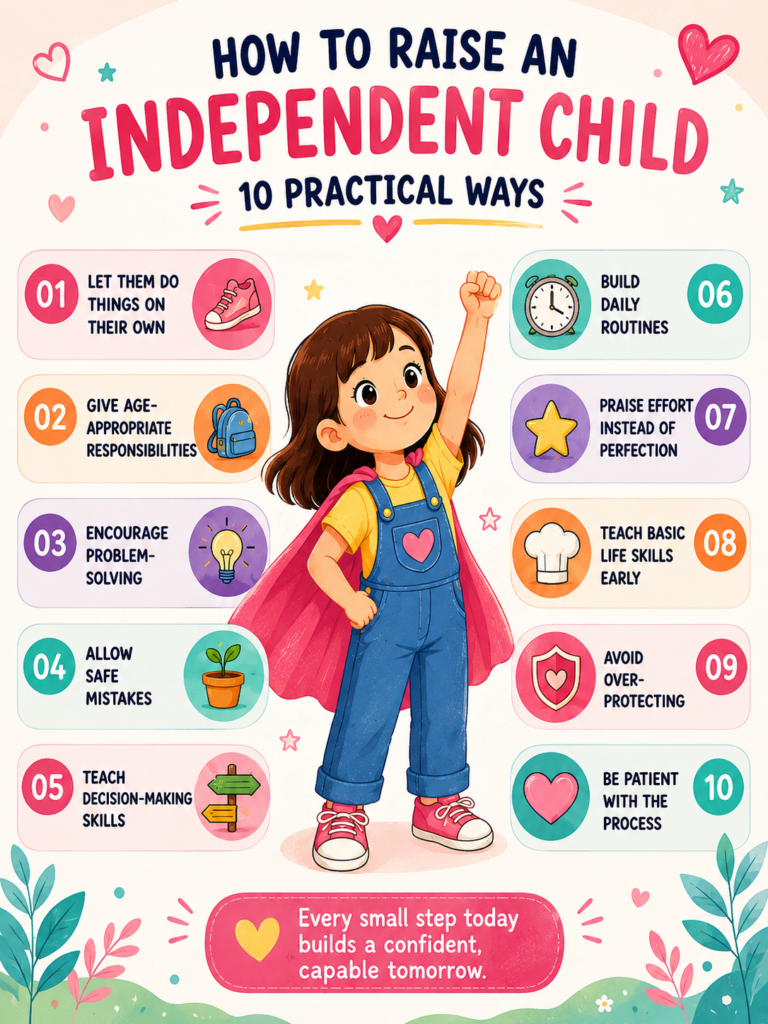
Below are tips for training your child to be independent while they are still young.
1. Let Them Do Things on Their Own
It can be tempting to tie their shoes, clean up their toys, or finish their homework when they’re struggling. However, giving children the chance to try—even if they make mistakes—helps build confidence. Depending on their age, they can:
- Dress themselves
- Pack their school bag
- Pour their own drink
- Organize their toys
- Feed the family pet
Resist the urge to jump in immediately. Sometimes they simply need a little more time.
2. Give Age-Appropriate Responsibilities
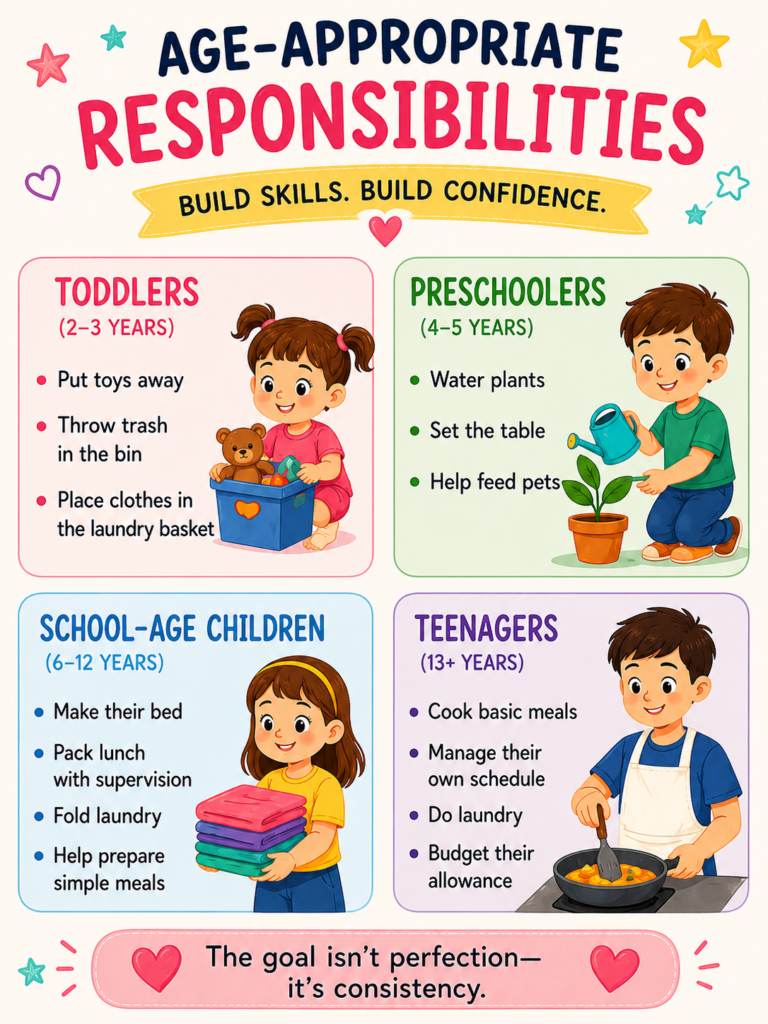
Children feel proud when they contribute to the family. Chores teach responsibility, teamwork, and accountability. Simple responsibilities may include:
Toddlers
- Put toys away
- Throw trash in the bin
- Place clothes in the laundry basket
Preschoolers
- Water plants
- Set the table
- Help feed pets
School-Age Children
- Make their bed
- Pack lunch with supervision
- Fold laundry
- Help prepare simple meals
Teenagers
- Cook basic meals
- Manage their own schedule
- Do laundry
- Budget their allowance
The goal isn’t perfection—it’s consistency.
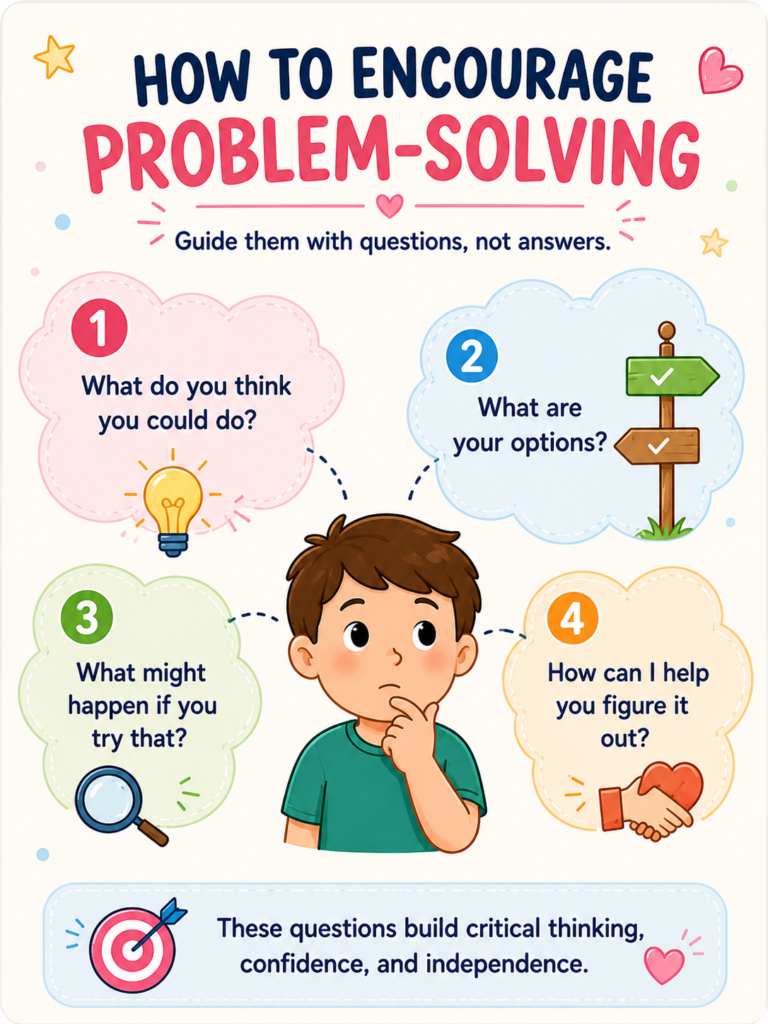
3. Encourage Problem-Solving
When your child comes to you with a problem, avoid immediately providing the solution. Instead, ask questions like:
- “What do you think you could do?”
- “What are your options?”
- “What might happen if you try that?”
- “How can I help you figure it out?”
These conversations teach critical thinking and build confidence in their own judgment.
4. Allow Safe Mistakes
Many parents want to prevent disappointment, but mistakes are valuable teachers. For example:
- Forgetting homework teaches organization.
- Spending all their allowance teaches budgeting.
- Losing a toy teaches responsibility.
As long as the consequences are safe and appropriate, let natural consequences become learning opportunities.
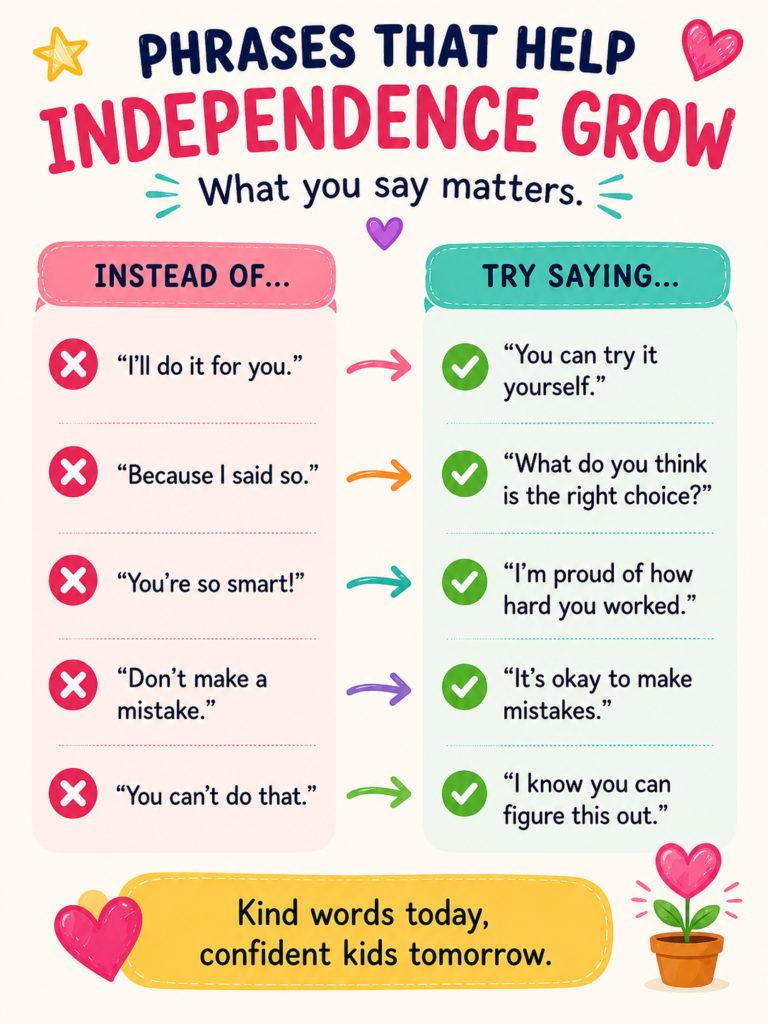
Instead of saying:
“I told you so.”
Try saying:
“What do you think you’ll do differently next time?”
This encourages reflection rather than shame.
5. Teach Decision-Making Skills
Giving children choices helps them develop confidence and independence.
Offer manageable options like:
- “Would you like the blue shirt or the green one?”
- “Would you like apples or bananas for your snack?”
- “Should we read one book or two before bedtime?”
As they grow older, involve them in bigger decisions, such as choosing extracurricular activities or managing part of their allowance.
6. Build Daily Routines
Predictable routines help children become more self-sufficient because they know what comes next.
Morning routines might include:
- Wake up
- Brush teeth
- Get dressed
- Eat breakfast
- Pack backpack
Evening routines can include:
- Bath time
- Tidy room
- Read a book
- Prepare clothes for tomorrow
Visual checklists work especially well for younger children.
7. Praise Effort Instead of Perfection
Children become more independent when they believe effort matters more than flawless results.
Instead of saying:
- “You’re so smart.”
Try:
- “I’m proud of how hard you worked.”
- “You kept trying even when it was difficult.”
- “You figured that out by yourself.”
This encourages a growth mindset and resilience.
8. Teach Basic Life Skills Early
Life skills don’t have to wait until adulthood. Depending on their age, children can learn:
- Basic cooking
- Laundry
- Cleaning up after themselves
- Personal hygiene
- Money management
- Time management
- Road safety
- Basic first aid
Teaching these skills gradually prepares them for future independence.
9. Avoid Overprotecting
Wanting to protect your child is natural, but constantly stepping in can send the message that they aren’t capable. Instead, become a supportive guide. Let them:
- Try something new
- Speak for themselves
- Resolve minor disagreements
- Experience manageable challenges
Confidence grows when children discover what they can accomplish.
10. Be Patient with the Process
Independence doesn’t happen overnight. Some days your child may confidently complete tasks on their own, while other days they may ask for extra help. This is a normal part of development.
Celebrate progress, no matter how small. Every new skill they master brings them one step closer to becoming a confident, capable individual.
Common Mistakes Parents Make
When encouraging independence, try to avoid these common pitfalls:
- Doing tasks your child can already do
- Expecting perfection
- Criticizing mistakes instead of teaching
- Comparing your child to others
- Giving responsibilities that aren’t age-appropriate
- Solving every problem for them
Supporting independence means offering guidance while allowing your child room to grow.
Independence Looks Different at Every Age
Every child develops at their own pace. Some naturally seek independence early, while others need more encouragement.
Rather than comparing milestones, focus on gradual progress. Building independence is a journey of learning, confidence, and trust between parent and child.
The most important thing you can give your child isn’t the ability to avoid every challenge—it’s the confidence that they can face those challenges themselves.
Help Your Child Grow with Confidence
At Pink Heart String, we believe every small step toward independence helps children develop confidence, resilience, and self-belief. Through practical parenting tips, family activities, and child development resources, we’re here to support you in raising happy, capable kids who are ready to thrive at every stage of life.
Frequently Asked Questions
At what age should children become independent?
Independence begins in toddlerhood with simple tasks like putting away toys or feeding themselves. As children grow, they can gradually take on more responsibilities that match their age and abilities.
Can giving too much independence be harmful?
Yes. Children still need guidance, boundaries, and emotional support. Healthy independence means providing age-appropriate freedom while staying available to help when needed.
How do I encourage an anxious child to be more independent?
Start with small, achievable tasks and celebrate their efforts. Offer reassurance without taking over, and gradually increase responsibilities as their confidence grows.
What if my child refuses to do things independently?
Stay patient and consistent. Break tasks into smaller steps, provide encouragement, and avoid doing the task for them unless they genuinely need help.