How to Store Rice Long-Term: A Practical Guide for Filipino Homes
Quick answer: Keep dry rice in a clean, completely dry, tightly sealed, food-safe container. Store it in the coolest, driest, darkest practical place, away from the stove, sink, sunlight, and floor. Buy an amount your household can rotate. For longer storage, divide white rice into small portions and use food-grade, high-barrier packaging with an appropriately sized oxygen absorber—but only if the rice and container are dry and the package is sealed correctly. Brown rice has a much shorter quality life because its bran contains oil.
Why rice storage matters
Rice is a dependable pantry staple in many Filipino homes: it is versatile, easy to portion, and useful in everyday meals as well as emergency planning. But a sack or bag of rice can lose quality if it absorbs moisture, sits in a hot spot, or is exposed to insects. In a warm, humid home, a good container and a simple rotation habit can make a noticeable difference.
This guide focuses on uncooked, dry rice. Cooked rice is a different food-safety issue: it must be cooled and refrigerated promptly, and should not be left at room temperature for extended periods. See the cooked-rice section below.
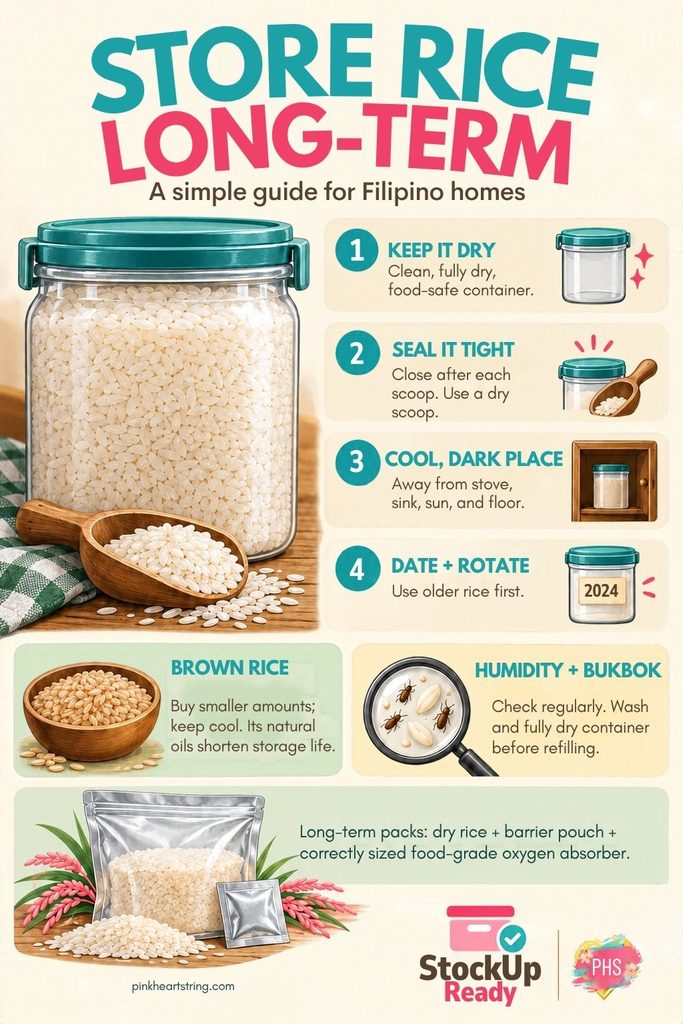
The four rules that protect dry rice
- Keep moisture out. Moisture can encourage mold and spoilage. Do not put damp rice or a wet scoop into storage.
- Limit heat and light. Heat speeds quality loss; sunlight can warm the rice and degrade packaging. Choose a shaded, cool location away from appliances.
- Seal out pests. Use a tightly closing container. Rice weevils may already be present in a product before it reaches the home, and airtight storage helps limit access and spread.
- Rotate the stock. Put newly bought rice behind older rice and use the older batch first. Keep only as much as you can store well and use within a reasonable period.
These principles align with Philippine National Nutrition Council advice to keep rice in an airtight container in a cool, dry place, and Singapore Food Agency consumer guidance to store rice in a tightly sealed container in a cool, dry place and buy smaller quantities when use is slow.
How long does rice last?
There is no single shelf-life number that applies to every rice product and every home. Storage temperature, moisture, packaging, processing, and the rice variety all matter. Treat these as quality-planning guides, not guarantees that rice will remain at peak quality for a fixed number of years.
| Rice type / storage setup | Practical guidance | Why it differs |
|---|---|---|
| White rice in an opened pantry pack | Use a clean airtight container and follow the package date and condition. Buy a quantity you can rotate regularly. | Opening exposes it to air, humidity, and possible pests. A hot or humid pantry shortens quality life. |
| White rice sealed for long-term storage | Properly packaged white rice can retain good quality for many years under favorable cool, dry, oxygen-limited conditions. Utah State University Extension gives a 25–30 year optimum-quality estimate for polished white rice under specified sealed storage conditions; it also notes that conditions matter. Do not assume an ordinary sack or kitchen tub will achieve this. | These extended estimates apply to carefully controlled packaging and storage—not routine pantry storage. |
| Brown rice | Buy smaller amounts and keep tightly sealed in a cool place; refrigeration or freezing can help preserve quality. Utah State University Extension gives about six months at 70°F (21°C) as a reference point. | The bran layer retains oil that can become rancid sooner than the more highly milled white rice. |
| Cooked rice | Refrigerate promptly in shallow, covered containers and use within 3–4 days, or freeze for longer storage. | Cooked rice is moist and perishable; dry-rice storage advice does not apply. |
Use the package label first. The “best before” or similar date is generally a quality guide, while spoilage signs and storage history matter for food safety. When in doubt—especially if rice is damp, moldy, smells musty or rancid, or has been exposed to floodwater—discard it.
Does white rice really last 25 or 30 years?
That figure is sometimes repeated without its conditions. Utah State University Extension says polished white rice can store for 25–30 years when properly sealed and stored, with temperature affecting the result. Its broader food-storage guidance emphasizes that cooler, stable temperatures, low moisture, protection from light, and appropriate airtight packaging are crucial. Rice sitting for decades in a hot garage, a frequently opened sack, or a container that leaks humidity is not equivalent.
For most households, buying and rotating rice on a routine schedule is more practical than trying to create a decades-long supply. Long-term packaging is an option for a deliberate emergency reserve, not a substitute for good daily storage.
Best way to store rice for everyday use
1. Start with dry, sound rice
Check the package before bringing it into your storage area. Avoid bags that are wet, torn, stained, or visibly infested. If the rice smells damp or musty, do not combine it with your existing supply.
If you buy rice in a large sack, transfer only what you can handle cleanly. Do not wash rice before storage. Washing adds moisture; rinse it only when you are ready to cook.
2. Choose a clean, food-safe container
A container should be intended for food contact, clean, completely dry, and fitted with a lid that closes securely. A sturdy food-grade plastic bin, glass jar, or food-safe metal container can work for routine pantry use. A clear container is convenient, but store it inside a dark cupboard or opaque outer bin to limit light.
Avoid containers that previously held chemicals, cleaning products, paint, or non-food materials. Do not rely on a thin grocery bag, loosely tied sack, or open bucket to protect rice from humidity and pests.
3. Store it in the right place
Keep the container in a cool, dry, shaded spot. In a Filipino kitchen, that usually means a closed cupboard or pantry shelf away from the stove, oven, rice cooker exhaust, sink, and windows with direct sun. Avoid storing rice on the floor, where spills, leaks, pests, or floodwater can reach it. If flooding is a concern, use a raised shelf and a sealed outer tote as secondary protection.
A refrigerator or freezer can help preserve brown rice and may be useful for smaller quantities in a hot home, but let a cold container come to room temperature before opening. This reduces condensation forming on cold rice when warm, humid air enters. Keep rice sealed while it warms.
4. Use a dry scoop and clean refill routine
Use a clean, dry scoop. Keep hands, wet measuring cups, and steam away from the rice. When the container is empty, wash it, rinse if needed, and let it dry fully before refilling. Do not simply top off an old container indefinitely: old grains, dust, or pests can remain at the bottom.
5. Label and rotate
Write the rice type and purchase or opening date on the container. If you keep more than one batch, mark which one should be used first. Put the newer supply behind the older supply and check it as part of your regular pantry review.
How to store rice for the long term
For an emergency reserve that you do not plan to open often, the goal is to protect dry white rice from moisture, oxygen, light, and pests. A food-grade, high-barrier foil laminate pouch (often called a Mylar-type bag) heat-sealed inside a protective food-safe bucket is a common home-storage setup. The bucket protects the pouch from punctures and pests; the sealed barrier pouch limits air and moisture exchange.
A careful packaging workflow
- Select the rice. Use plain, dry white rice with no added oil, seasoning, or moisture. Long-term storage is generally discussed for low-moisture staples, not cooked or prepared rice.
- Use clean, dry equipment. Make sure hands, the work surface, bags, bucket, and scoop are dry. Do not pack rice that has been exposed to moisture.
- Portion for use. Choose bags small enough to use soon after opening. A single giant bag is inconvenient and repeatedly exposing it to humid air undermines the point of long-term packaging.
- Add a food-grade oxygen absorber rated for the package. Follow the absorber maker’s directions for the bag size and the food. Do not guess the capacity or use an absorber intended for another purpose. Keep unused absorbers sealed according to their packaging.
- Heat-seal the pouch. Remove excess air as the package design allows and make a complete, straight seal. Check that the seal has no gaps or wrinkles. An oxygen absorber is not a substitute for an intact moisture- and oxygen-barrier package.
- Protect and label. Put sealed pouches in a clean, food-safe bucket or tote. Mark rice type, packing date, and any instructions. Store off the floor, away from heat, sunlight, moisture, and pests.
- Inspect periodically. Check for broken seals, holes, water damage, pests, and changes in the container. Use older stock first.
Important oxygen-absorber safety note
Oxygen absorbers are appropriate only for dry, low-moisture foods in suitable sealed packaging. Utah State University Extension warns that reduced-oxygen packaging of moist products can create a botulism hazard. Never use oxygen absorbers to package cooked rice, damp rice, or other moist food. Keep packets away from children and pets; they are not edible.
A vacuum sealer alone is not a long-term preservation method. Utah State University Extension explains that vacuum packaging does not replace safe preservation or proper storage conditions. For a typical household pantry, a clean airtight container and rotation may be simpler and more useful.
White rice vs. brown rice: store them differently
The main storage difference is the bran. Brown rice retains more of the grain’s outer layers, including a small amount of oil. That oil can develop stale or rancid flavors sooner, so brown rice does not have the same long storage potential as polished white rice.
- White rice: Good candidate for larger pantry reserves and, when properly packaged, longer-term storage.
- Brown rice: Buy in smaller amounts. Keep it well sealed and cool; refrigerate or freeze if you need to extend quality life. Let it warm while sealed before opening to avoid condensation.
- Flavored, seasoned, or instant rice: Follow the package instructions. Added ingredients and processing can change storage recommendations.
Do not apply white-rice long-term shelf-life claims to brown rice, parboiled specialty products, rice mixes, or cooked rice without checking product-specific guidance.
How to prevent bukbok (rice weevils)
Rice weevils—often called bukbok—are small stored-grain insects. They can be present in grain before it is purchased, and signs may only become visible later. Seeing a weevil does not automatically mean the rice has been exposed to a dangerous chemical or that a home infestation began in the kitchen. Still, inspect and respond promptly.
To reduce the chance of a problem:
- Store rice in a tightly sealed container in a cool, dry location.
- Open only the package you are using; avoid leaving several large bags open.
- Buy smaller quantities if your household uses rice slowly.
- Clean and fully dry the container before refilling.
- Check nearby dry goods such as flour, pasta, cereal, beans, and pet food if you find insects.
- Keep shelves free of spilled grains and crumbs.
If you find insects, separate the affected package and inspect it and nearby foods. Singapore Food Agency guidance says rice weevils are not known to spread disease or cause illness, and that affected rice can be washed and consumed; it recommends removing weevils and consuming the stock quickly. Households may reasonably choose to discard rice if it is heavily infested or if its condition is uncertain. Discard it if it is damp, moldy, musty, or otherwise spoiled. Clean and dry the storage container before using it again. Do not spray insecticide on food or food-contact surfaces.
Some households freeze a small, newly purchased package as a pest-control step, but let it return to room temperature while still sealed before opening to prevent condensation. Freezing does not compensate for a container that is later left open or damp.
What about cooked rice?
This article is about dry, uncooked rice. Cooked rice needs prompt temperature control. Cool leftovers quickly in shallow containers and refrigerate; do not leave cooked rice sitting at room temperature. The UK Food Standards Agency advises cooling cooked rice as quickly as possible (ideally within one hour), refrigerating it, and using it within 24 hours; it also advises reheating it only once until steaming hot throughout. FoodSafety.gov gives a general 3–4 day refrigerator window for leftovers and advises refrigerating perishable food within two hours (one hour above 90°F/32°C). Since the rice-specific guidance is more cautious, use cooked rice within 24 hours where practical, or freeze portions. If cooked rice has been left out too long or you are unsure how it was handled, discard it.
For disaster-related refrigeration loss, follow FoodSafety.gov emergency food guidance. Do not taste food to decide whether it is safe.
Common rice-storage mistakes
Leaving rice in an opened sack
A sack is awkward to reseal and can be exposed to humid air, spills, and insects. Transfer everyday-use rice to a tightly closing food-safe container.
Putting warm rice or a wet scoop into the container
Warmth and moisture are enemies of dry storage. Keep rice uncooked and dry, and use only a dry scoop.
Storing rice next to heat or water
A cupboard beside the stove or sink may be convenient, but it can expose rice to steam, splashes, and temperature swings. Choose a shaded shelf away from these sources.
Assuming an oxygen absorber makes every food safe forever
Absorbers do not remove moisture, repair a bad seal, or make wet food safe. They must be sized for the packaging and used only with dry foods.
Keeping a large quantity without a rotation plan
A bulk purchase saves a trip only if the rice remains usable and the household actually eats it. Stock an amount that fits your storage conditions and consumption pattern.
Quick checklist
- Rice is dry, sound, and in good condition.
- Container is food-safe, clean, fully dry, and tightly sealed.
- Storage spot is cool, dry, shaded, and away from heat and water.
- Rice is stored off the floor and protected from leaks or pests.
- Scoop is clean and dry; container is washed and dried before refilling.
- Pack date or purchase date is visible and older rice is used first.
- Brown rice is bought in smaller amounts or stored colder.
- Long-term pouches contain only dry rice and a correctly rated food-grade absorber.
Frequently asked questions
Should I keep rice in its original bag?
You can keep a sealed, undamaged retail package in a dry cupboard until you open it. Once opened, put the rice in a tightly sealed food-safe container, or place the entire original bag inside a protective container that closes securely.
Can I store rice in a plastic bottle?
A clean, completely dry, food-safe plastic container with a tight lid can work for routine storage. Make sure it is fully dry inside and easy to clean. For long-term storage, ordinary thin plastic is not equivalent to a high-barrier pouch designed to limit oxygen and moisture exchange.
Should I wash rice before storing it?
No. Store rice dry and rinse it only when preparing to cook. Washing adds moisture and can promote spoilage.
Can I put rice in the refrigerator?
Yes. Refrigeration can help preserve brown rice and may help in a hot home, provided the rice stays sealed and dry. Let a cold container warm to room temperature before opening to avoid condensation. For everyday white rice, a cool, dry, dark pantry is usually simpler.
Does white rice expire?
Rice quality can decline, and the package date should be followed. Properly sealed white rice can last far longer than ordinary opened pantry rice under favorable conditions, but a long-term estimate is not a guarantee. Check for moisture, pests, damaged packaging, and off odors, and use good judgment.
Is rice with bukbok safe to eat?
The Singapore Food Agency says rice weevils are not known to spread disease or cause illness and that affected rice can be washed and consumed. If you choose to keep it, inspect the rice carefully, remove visible insects, and cook it properly. Discard rice that is damp, moldy, musty, or otherwise spoiled, and clean and dry the container.
A simple StockUp Ready plan
StockUp Ready can help you plan how much rice to keep and when to use it. Start with the amount your household normally cooks, estimate how quickly you go through a bag, and choose a reserve that fits your storage space. Label each batch and rotate it into regular meals before buying more. A modest supply you can keep dry and use is more dependable than a large reserve that sits forgotten in a hot or humid corner.
Related reading: How Much Rice Per Person Per Day? · Family Emergency Food Checklist
Sources and research notes
Sources below support the storage, pest, and food-safety guidance. Shelf-life figures are presented as conditional estimates, not guarantees.
- Philippine National Nutrition Council — The Food on My Plate: Rice — recommends airtight storage in a cool, dry place.
- Singapore Food Agency — Rice Weevils — consumer guidance on why weevils appear, sealed storage, buying smaller quantities, container cleaning, and handling affected rice.
- Utah State University Extension — Storing White Rice — storage conditions and conditional long-term quality estimate for polished white rice.
- Utah State University Extension — Brown Rice — explains the oil in brown rice bran and gives a six-month reference at 70°F.
- Utah State University Extension — Food Storage Conditions — moisture, temperature, light, and off-floor storage principles.
- Utah State University Extension — Packaging Foods — packaging guidance for dry foods and use of oxygen absorbers.
- Utah State University Extension — 7 Factors That Prolong Your Food Storage Supply — warns that reduced-oxygen packaging is for dry foods and can be hazardous with moist products.
- FDA — Are You Storing Food Safely? — general storage and food-safety guidance.
- FoodSafety.gov — Food Safety During an Emergency — emergency power and food-safety guidance.
- FoodSafety.gov — Cold Food Storage Chart — general refrigerator and freezer storage timelines for leftovers.
- UK Food Standards Agency — Safe method for cooking rice — rice-specific cooling, refrigeration, and reheating guidance.
Editorial note: We did not find one authoritative consumer source that establishes a universal shelf life for rice stored in a typical Philippine home. For that reason, this article distinguishes everyday pantry storage from optimized long-term storage and emphasizes package directions, household conditions, inspection, and rotation.