One morning, while making coffee and mentally preparing for the school-day rush, I noticed something strange.
My child was sitting quietly on the couch.
Too quietly.
I looked closer.
A finger went up the nose… paused… and then — straight into the mouth.
I froze.
Did that really just happen?
Yes. Yes, it did.
If you’re a parent, chances are you’ve witnessed this moment at least once. It’s shocking, funny, and slightly traumatising all at the same time. And it usually comes with the same question:
Why do kids eat boogers? Is this normal? And should I be worried?
Let’s talk about it — honestly, scientifically, and without judgment.
What Are Boogers, Anyway?
Before we dive into the habit, let’s understand what boogers actually are.
Boogers are dried nasal mucus. Your child’s nose produces mucus to trap:
- Dust
- Pollen
- Bacteria
- Viruses
- Air pollutants
When that mucus dries up, it turns into the little crusty bits we call boogers.
So yes, they’re gross — but they’re also part of your body’s natural protection system.
Why Do Kids Eat Boogers?
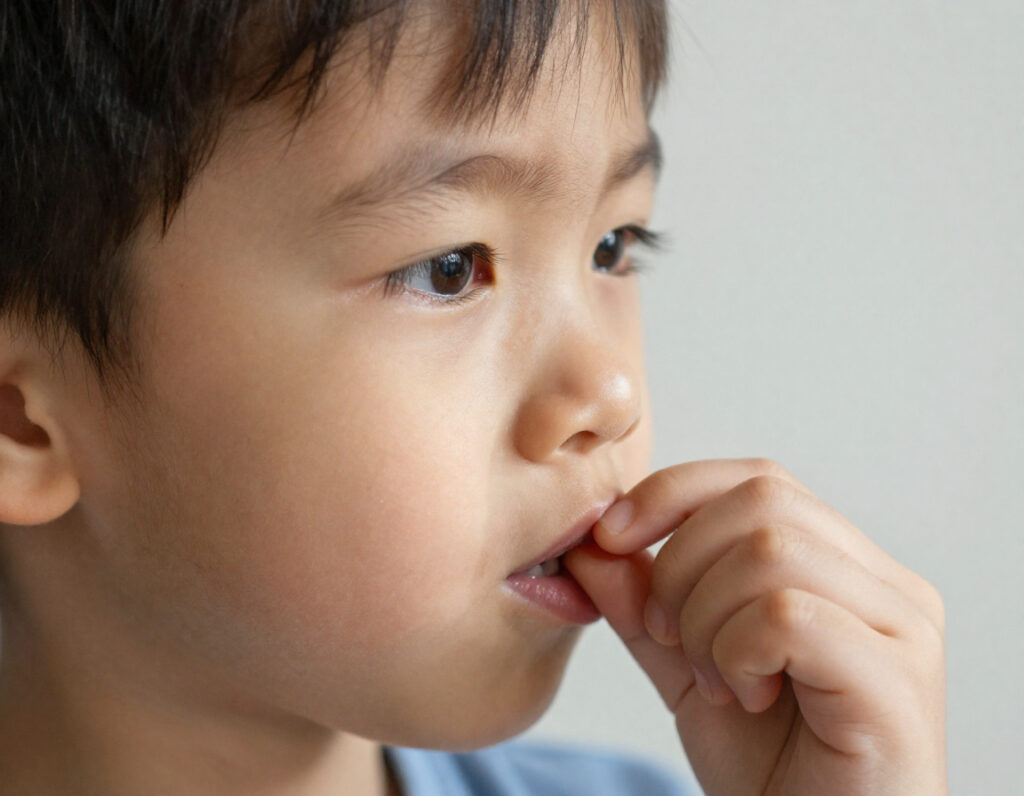
1. Kids Explore Through Their Senses
Young children learn about the world by touching, smelling, and tasting everything. Including things they probably shouldn’t.
To adults, eating boogers is disgusting. To kids, it’s just curiosity.
They’re not trying to be “gross.” They’re just learning.
2. Boogers Taste Salty (And Some Kids Like It)
As uncomfortable as this is to admit, boogers have a slightly salty taste. That’s because mucus contains natural salts.
Some kids actually find this appealing — especially toddlers and preschoolers who are still figuring out flavours and textures.
3. They Haven’t Learned Social Rules Yet
Children aren’t born knowing what’s polite. They have to learn it. Until then:
- Nose picking feels normal
- Eating boogers feels harmless
- No embarrassment exists
Social awareness develops over time. Once it does, most kids naturally stop.
4. The “Immune System” Theory
Some researchers have wondered if eating boogers might expose kids to tiny amounts of germs, helping train their immune system. Interesting idea.
But there’s no strong scientific evidence proving it’s beneficial. So no — it’s not a secret health trick.
It’s just a habit.
Is It Normal for Kids to Eat Boogers?
Yes. Completely. Eating boogers is very common in children, especially between ages 2 and 6.
It’s part of:
- Sensory exploration
- Habit formation
- Self-soothing behaviour
- Early development
Most kids go through this phase and grow out of it.
You’re not alone. You’re not failing. Your child is normal.
Is Eating Boogers Bad for Children?
The Good News
Good news for parents: eating boogers probably won’t make your child sick — after all, mucus constantly travels down the back of the throat naturally anyway. But “probably safe” doesn’t mean it’s a great habit. Booger eating doesn’t provide nutrition, and it can spread germs from hands to the mouth if they don’t wash their hands afterward.
Also, frequent nose picking can irritate or even injure delicate nasal tissue, leading to nosebleeds or infections in some cases.
In most cases, eating boogers is harmless. Kids naturally swallow mucus every day as it runs down their throats.
So one extra booger usually won’t cause problems.
The Not-So-Good News
However, frequent nose picking and booger eating can:
- Spread germs
- Increase cold infections
- Irritate the nose
- Cause nosebleeds
- Create small sores
So while it’s not dangerous, it’s better to gently discourage it.
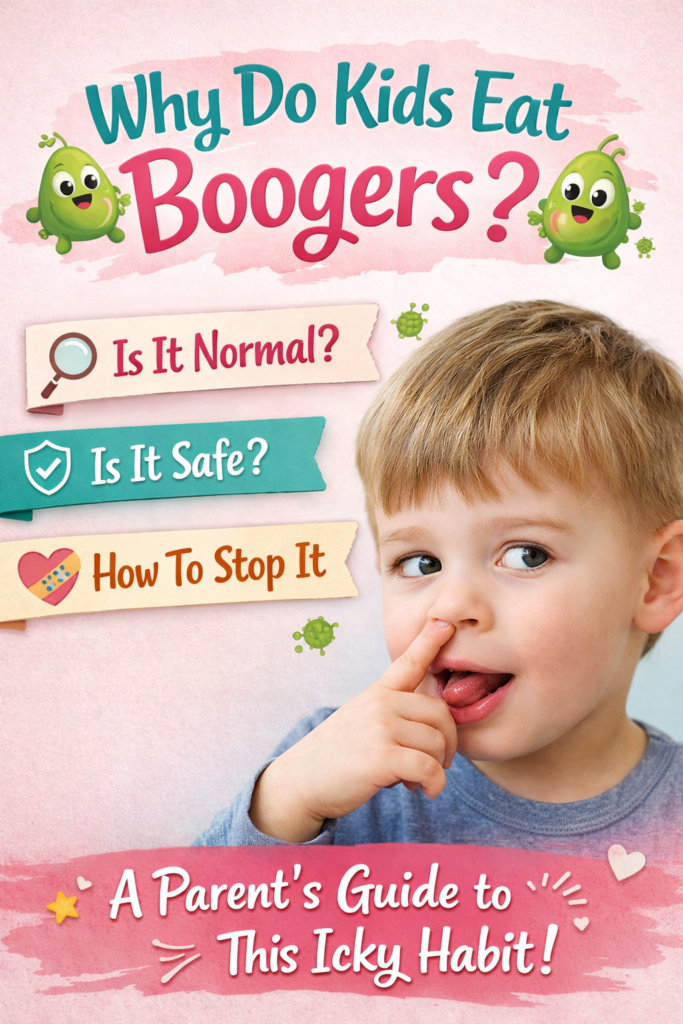
Why Some Kids Do It More Than Others
Some children are more likely to eat boogers if they:
- Have allergies
- Get frequent colds
- Have dry noses
- Feel anxious
- Get bored easily
- Have sensory sensitivities
For many kids, it’s less about the boogers — and more about comfort.
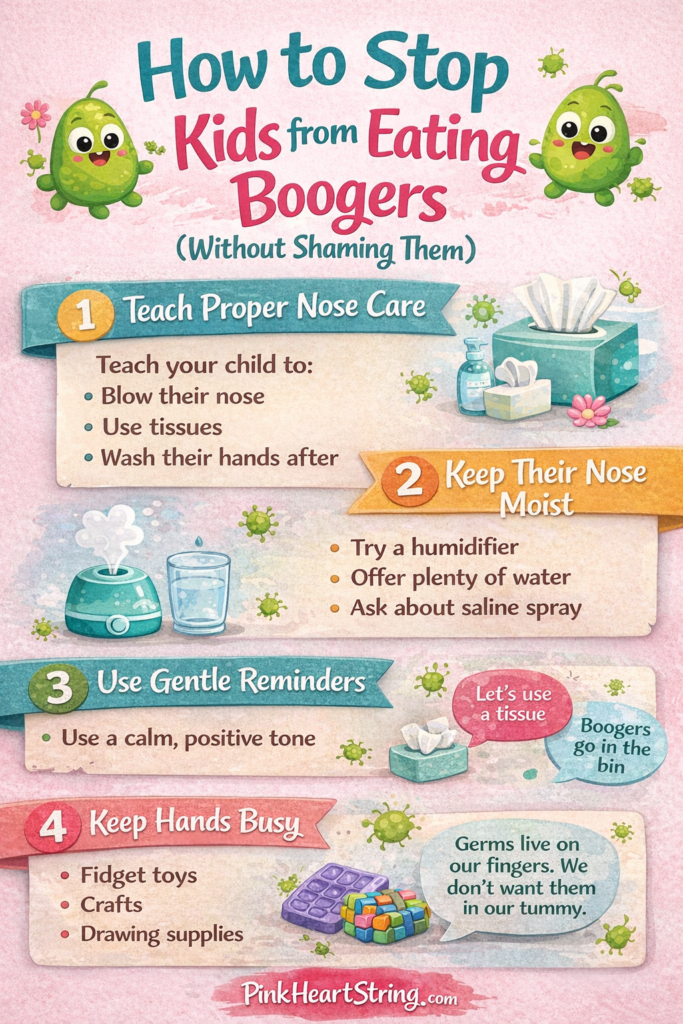
How to Stop Kids from Eating Boogers (Without Shaming Them)
Let’s be honest.
Yelling “That’s gross!” rarely works. It usually just makes kids hide the habit. Here’s what helps instead.
1. Teach Proper Nose Care
Show your child how to:
- Blow their nose
- Use tissues
- Throw tissues away
- Wash hands
Make it part of your daily routine.
2. Keep Their Nose Moist
Dry noses = more boogers. Try:
- A humidifier
- Plenty of water
- Saline spray (if recommended by a doctor)
Comfort reduces picking.
3. Use Gentle Reminders
Instead of scolding, say:
“Let’s use a tissue, sweetheart.”
“Boogers go in the bin.”
Calm. Kind. Consistent.
4. Keep Hands Busy
Busy hands don’t wander. Offer:
- Fidget toys
- Colouring books
- Crafts
- Puzzles
Distraction works.
5. Explain Germs Simply
Use kid-friendly language:
“Germs live on our fingers. We don’t want them in our tummy.”
No fear. Just facts.
When Should Parents Worry?
Most of the time, there’s nothing to worry about. But consider speaking to a doctor if your child:
- Picks constantly
- Has frequent nose injuries
- Seems anxious
- Shows repetitive behaviours
This could point to allergies, anxiety, or sensory needs.
Will My Child Outgrow This Habit?
Almost always — yes. As kids grow, they:
- Learn hygiene
- Become socially aware
- Feel embarrassed doing it in public
- Prefer proper snacks
Most children stop naturally by school age. This phase will pass.
Promise.
Parenting Is Messy — Literally
If you’ve ever locked eyes with your child mid-booger snack and questioned your life choices, welcome to parenting. Eating boogers is:
- Normal
- Common
- Temporary
- Usually harmless
With patience, gentle guidance, and good habits, your child will move on.
And one day, you’ll laugh about it.
Maybe.